How to choose paper and finish
The right paper makes your print feel right for the job. Start with how it will be used, then choose the weight, surface and finish.
Your paper and finish checklist
- Will it be handed out, posted, folded, written on or kept?
- Use gsm to compare weight, not exact thickness.
- Choose uncoated for writing, silk for a softer sheen or gloss for a high shine.
- Decide whether an extra laminated finish will help.
- Check the stock and finishing options on your chosen product.
- Ask to compare samples if colour, texture or feel matters.
Know More
Paper weight: what gsm actually means
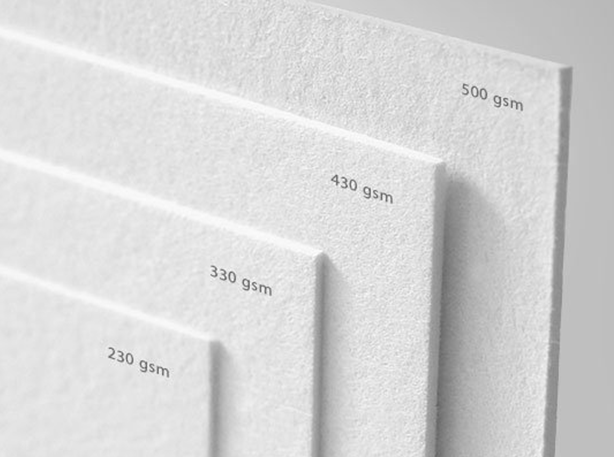
Gsm stands for grams per square metre. It tells you how much a square metre of that paper weighs. A higher number means a heavier sheet of the same size, but it does not tell you everything about its feel.
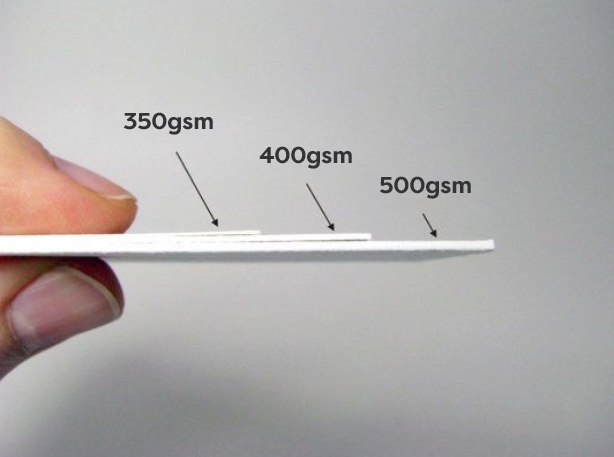
Weight and thickness are different measurements. Two papers with the same gsm can feel different because of their fibres, coating and how they are made. One may feel bulkier, smoother or more flexible than the other.
Choose the weight for the job
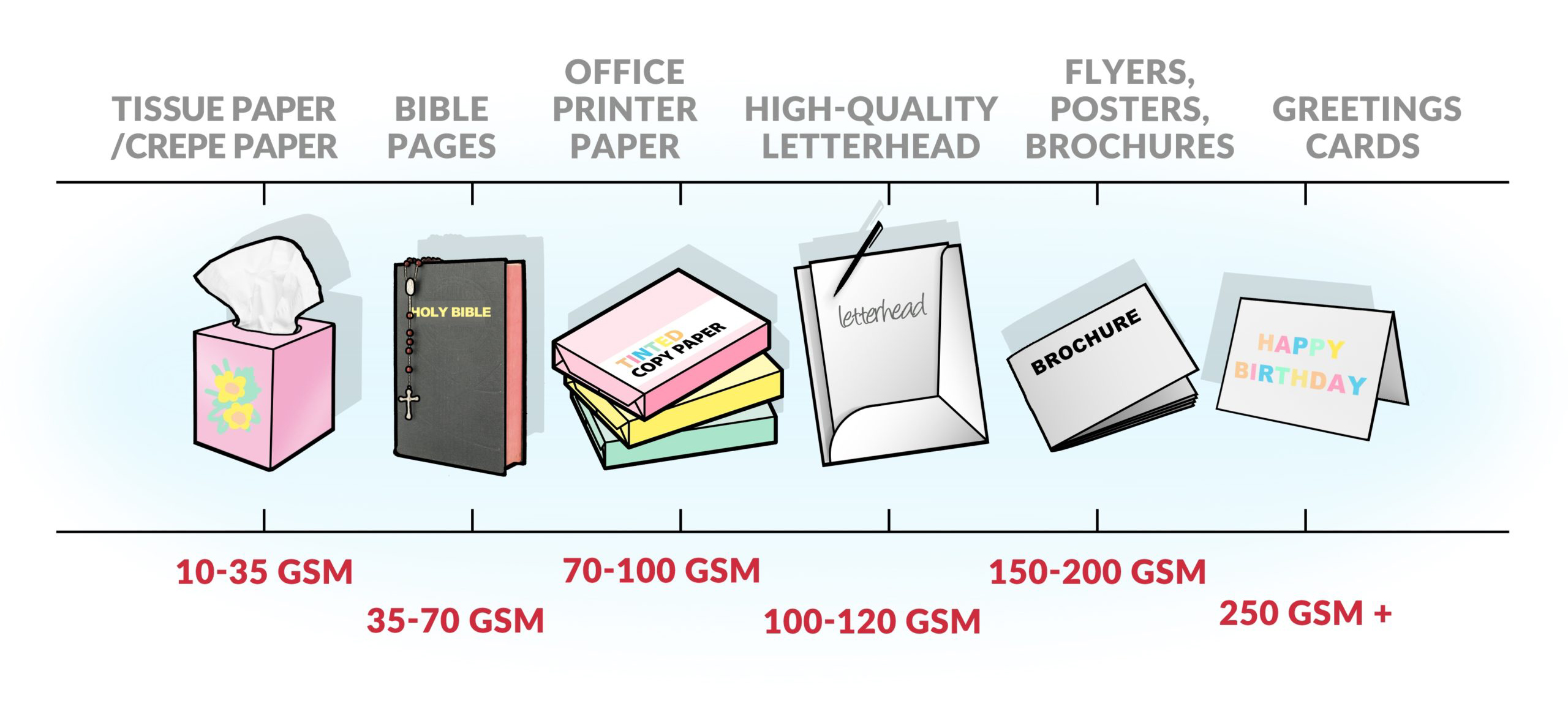
Think about what happens after your print leaves the box. A letter needs to fold and fit an envelope. A flyer needs to feel right when it is handed out. A business card needs to stand up to being kept in a wallet.
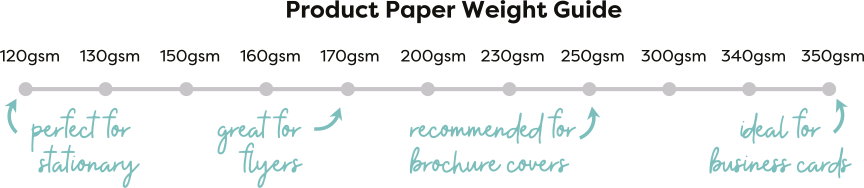
Stationery and forms: lighter, flexible paper is practical for everyday documents. A little more weight can give a letterhead a firmer feel, without turning it into card.
Flyers, leaflets and booklet pages: choose a balance between feel, flexibility and cost. A lighter stock can suit a large handout run; a heavier one gives a more substantial feel. For double-sided print, consider how much the artwork on the reverse might show through.
Cards and covers: heavier stocks are useful for business cards, invitations and brochure covers. For booklets, choose the cover and inside pages together. Thick paper throughout can make the finished booklet bulky or harder to handle.
Choose the stock that does the job well. A thick card may make a good first impression, but it is not the answer for every fold, page count or postal mailing.
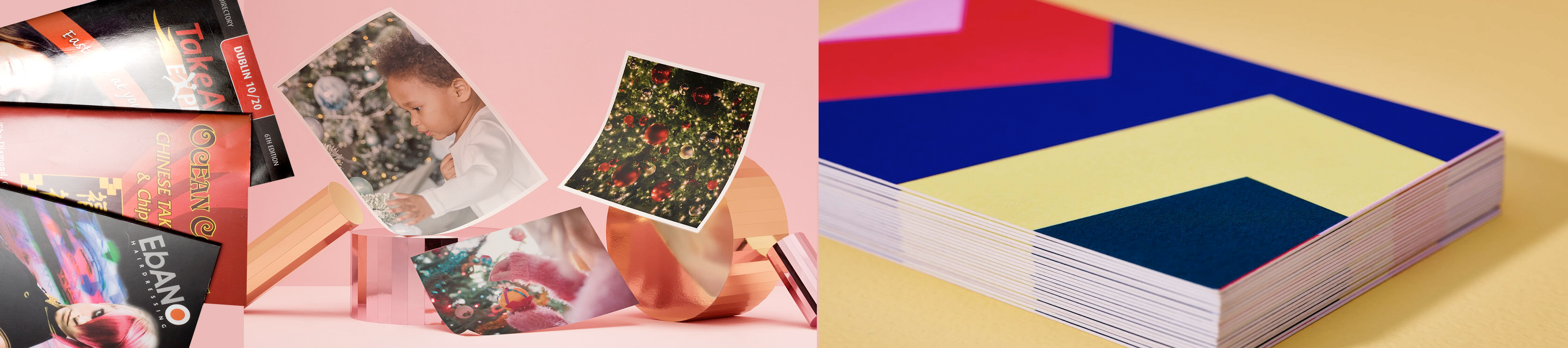
Uncoated, silk or gloss?
The paper surface affects how your artwork looks and how the finished print feels. It also matters if someone needs to write on it.
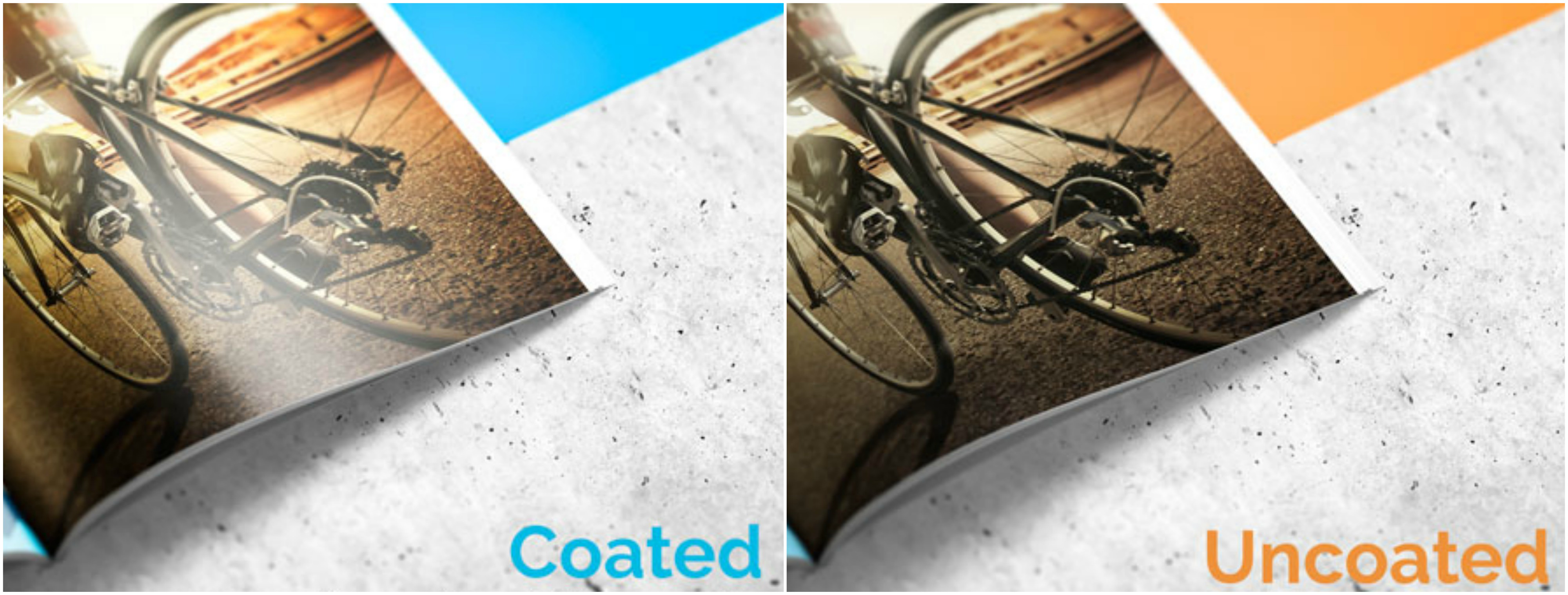
Uncoated has no added surface coating. It has a natural paper feel and is usually the best starting point for letterheads, forms, notepads and writing areas. Colours can look softer than they do on coated paper.
Silk is coated paper with a smooth surface and a lower sheen than gloss. It is a useful all-round choice for flyers, brochures and print that mixes photographs with text.
Gloss has a shinier coated surface. It can suit photographs and bold colour, but reflected light is more noticeable. Think about where the print will be read, especially under bright lights.
For appointment notes, signatures, stamps or handwritten messages, tell us which side needs to stay writable. Do not assume a pen will work well on every coated or laminated surface.
Lamination: a separate finishing choice
Lamination adds a thin film after printing. It changes the surface feel and can help protect print from everyday handling. This is different from the thick pouch lamination often used for signs and documents.
Matt lamination gives a lower-shine finish. Gloss lamination gives a high shine. Soft-touch lamination has a softer, velvety feel. The best choice depends on the look you want and the finishes available for your product.
Silk paper and matt lamination are not the same thing. One is the paper surface; the other is a film added on top. You can choose a paper first, then decide whether it needs an extra finish.
Lamination does not automatically make print waterproof or tearproof. Exposed edges, folds and the paper underneath still matter. Tell us before ordering if it will be used outdoors, wiped clean or handled heavily.
Folding, posting and other practical checks

A folded leaflet needs to open neatly, not fight its fold. Heavier stocks may need creasing before folding to help reduce cracking. Consider the weight, coating and fold together rather than choosing each in isolation.
For posted print, check the weight of the finished item, including its envelope and inserts. A heavier stock can affect postage. For booklets, page count, cover weight and binding all affect the finished feel.
If you want a recycled, textured or coloured stock, ask what is available for your product. Paper shade and texture can change how the artwork looks, so compare a sample rather than choosing from a name alone.
Compare a real sample before deciding
A screen cannot show the feel of paper, and a photograph is not a precise colour proof. The same artwork can look different on uncoated, silk and gloss stock; lamination can change the appearance again.
If a brand colour, texture or finish matters, ask before ordering. A physical sample helps you judge the weight and surface together. Then check the options on the product you are buying.
FAQs
What does gsm mean?
Grams per square metre. It measures the weight of paper, not its exact thickness.
Is higher gsm always better?
No. A business card needs a different feel from a letter or a booklet page. Choose for the job, not the biggest number.
What paper should I use for flyers?
Silk is a useful starting point. Lighter paper suits large handout runs; a heavier stock gives a firmer feel. Check the options on the flyer you are ordering.
Which paper is best for writing on?
Uncoated is usually the safest starting point. Tell us if it needs to take a pen, signature or stamp, and which side needs to stay writable.
Are silk and gloss the same?
Both are coated paper. Silk has a softer sheen; gloss has a shinier surface.
Is matt lamination the same as matt paper?
No. Matt describes a low-shine appearance. Lamination is a film added after printing; the paper underneath has its own surface finish.
Will lamination make my print waterproof?
Do not assume so. The paper, exposed edges and folds still matter. Tell us if it needs to cope with rain, spills or repeated cleaning.
Can I compare samples?
Ask us before ordering. A physical sample is the best way to compare weight, texture and finish.
Not sure which stock to choose?
Tell us what you are printing and how it will be used. We can help you choose the paper and finish before you order.